

L.E. Wilson197559026
Wilson Brass Minimum Dimension Gage SAAMI Chamber .223 Rem$58.08
Availability: In Stock
The L.E. Wilson Brass Minimum Dimension Gage for .308 Win is a precision inspection tool that checks whether your reloaded ammunition meets SAAMI minimum chamber specifications. This gage is essential if you're loading ammo intended to function reliably across multiple rifles of the same caliber—a common goal for serious handloaders who want their rounds to chamber in various firearms without fitting issues or premature wear.
Understanding what this gage does—and doesn't—matters. SAAMI minimum chamber dimensions are intentionally larger than maximum cartridge dimensions. Your reloads passing the minimum dimension gage means they meet the published spec floor. If a round enters the gage but won't chamber in your rifle, that's a sign your gun has a tighter-than-spec chamber, possibly from a chamber reamer cut below minimum headspace or an unusual reaming error. Conversely, rounds that won't enter the gage fall outside SAAMI minimum dimensions and warrant another look before firing. The gage also serves as a quick check that you're under maximum SAAMI coal—useful verification before you press primers.
Most reloaders benefit from using the minimum dimension gage alongside a regular case gage (for bottleneck cartridges like .308 Win). The regular gage helps you determine proper shoulder pushback and trim length for your specific chambers; the minimum dimension gage verifies your finished rounds conform to industry standards. This two-tool approach catches uniformity problems, identifies loading errors, and gives you confidence when pooling ammo across multiple firearms. Many handloaders also use it to quality-check factory ammunition they've purchased.
| Caliber | .308 Winchester |
| Gage Type | Minimum Dimension / SAAMI Chamber |
| Manufacturer | L.E. Wilson |
| Purpose | Verify reloads meet SAAMI minimum chamber dimensions and OAL |
Use the regular case gage first on bottleneck cartridges like .308 Win to determine proper shoulder position and case trim length for your rifle's chamber. Then use the minimum dimension gage to verify your finished reloads meet SAAMI spec floors. Together, they confirm uniformity and catch loading errors.
It means your rounds meet SAAMI minimum chamber specs, but your rifle has a tighter-than-spec chamber. This could result from an unusually tight reamer cut or a chamber cut below minimum headspace. Your rounds are safe and will likely chamber in other rifles; this specific rifle may simply have tight tolerances.
Yes. Many reloaders use the minimum dimension gage to verify that factory ammo conforms to SAAMI standards, making it useful for quality control or troubleshooting feeding or cycling issues.
Yes, the minimum dimension gage also allows you to perform a quick check that your reloads are under maximum SAAMI coal. However, always verify overall length with your specific bullet type, as coal varies by bullet weight and design—consult your bullet manufacturer's published data.
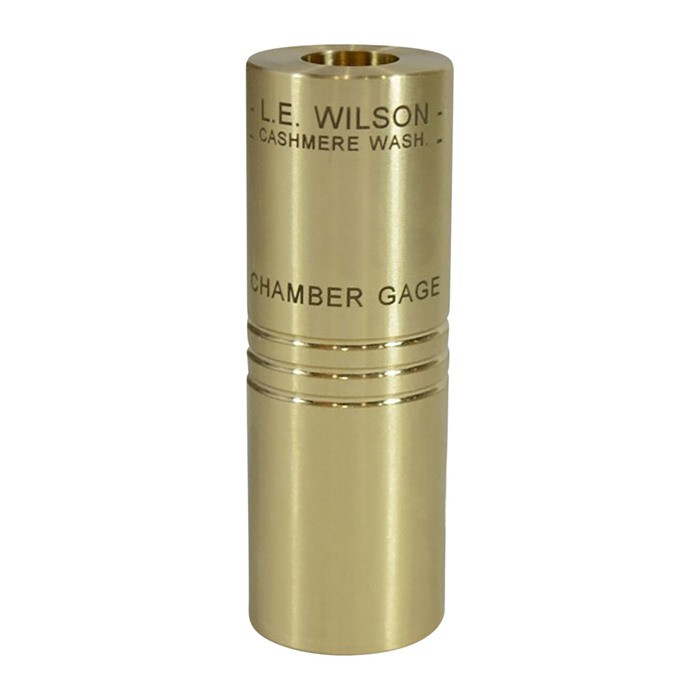
SKU: 197558995 • Width: 1.25in • Height: 1.25in • Depth: 3.5in • Weight: 0.7oz


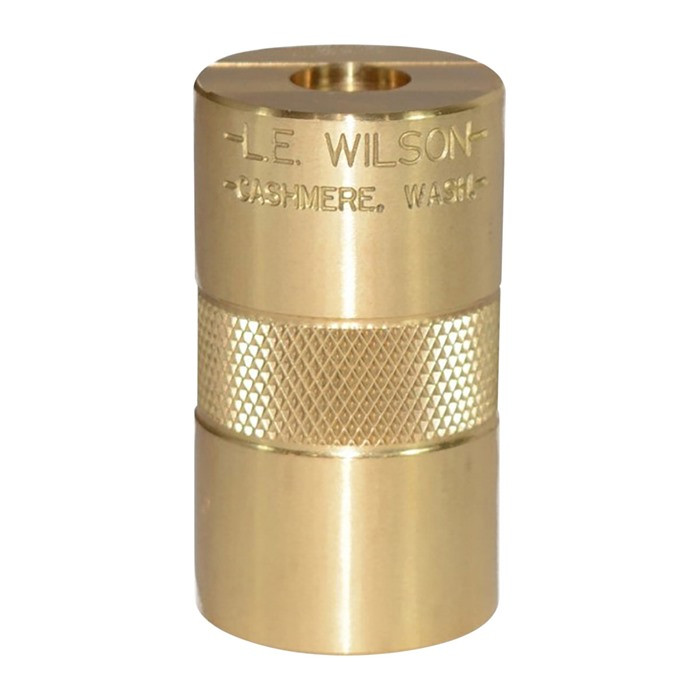

Availability: In Stock
The L.E. Wilson Brass Minimum Dimension Gage for .308 Win is a precision inspection tool that checks whether your reloaded ammunition meets SAAMI minimum chamber specifications. This gage is essential if you're loading ammo intended to function reliably across multiple rifles of the same caliber—a common goal for serious handloaders who want their rounds to chamber in various firearms without fitting issues or premature wear.
Understanding what this gage does—and doesn't—matters. SAAMI minimum chamber dimensions are intentionally larger than maximum cartridge dimensions. Your reloads passing the minimum dimension gage means they meet the published spec floor. If a round enters the gage but won't chamber in your rifle, that's a sign your gun has a tighter-than-spec chamber, possibly from a chamber reamer cut below minimum headspace or an unusual reaming error. Conversely, rounds that won't enter the gage fall outside SAAMI minimum dimensions and warrant another look before firing. The gage also serves as a quick check that you're under maximum SAAMI coal—useful verification before you press primers.
Most reloaders benefit from using the minimum dimension gage alongside a regular case gage (for bottleneck cartridges like .308 Win). The regular gage helps you determine proper shoulder pushback and trim length for your specific chambers; the minimum dimension gage verifies your finished rounds conform to industry standards. This two-tool approach catches uniformity problems, identifies loading errors, and gives you confidence when pooling ammo across multiple firearms. Many handloaders also use it to quality-check factory ammunition they've purchased.
| Caliber | .308 Winchester |
| Gage Type | Minimum Dimension / SAAMI Chamber |
| Manufacturer | L.E. Wilson |
| Purpose | Verify reloads meet SAAMI minimum chamber dimensions and OAL |
Use the regular case gage first on bottleneck cartridges like .308 Win to determine proper shoulder position and case trim length for your rifle's chamber. Then use the minimum dimension gage to verify your finished reloads meet SAAMI spec floors. Together, they confirm uniformity and catch loading errors.
It means your rounds meet SAAMI minimum chamber specs, but your rifle has a tighter-than-spec chamber. This could result from an unusually tight reamer cut or a chamber cut below minimum headspace. Your rounds are safe and will likely chamber in other rifles; this specific rifle may simply have tight tolerances.
Yes. Many reloaders use the minimum dimension gage to verify that factory ammo conforms to SAAMI standards, making it useful for quality control or troubleshooting feeding or cycling issues.
Yes, the minimum dimension gage also allows you to perform a quick check that your reloads are under maximum SAAMI coal. However, always verify overall length with your specific bullet type, as coal varies by bullet weight and design—consult your bullet manufacturer's published data.
SKU: 197558995 • Width: 1.25in • Height: 1.25in • Depth: 3.5in • Weight: 0.7oz